
Ownership & Maintenance
E10 Petrol and Classic Cars: A Practical Guide for UK Owners
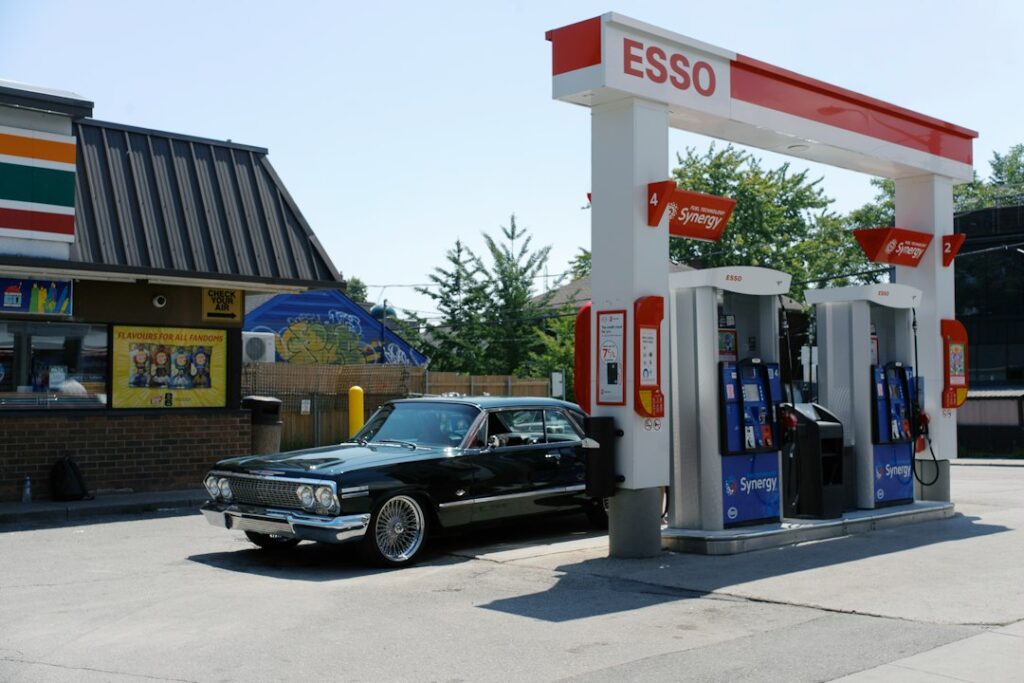
E10 has been Britain’s standard 95-octane petrol since September 2021 and was introduced in Northern Ireland in November 2022. For most modern cars it is unremarkable, but owners of classics and early modern classics should check compatibility before using it regularly.
Age alone does not provide a reliable answer. A late-1990s car may be approved for E10, while a particular early-2000s engine may not. Replacement hoses, seals, pumps or carburettor parts can also differ from the original specification.
What do E5 and E10 mean?
The number describes the maximum ethanol content: E5 contains no more than 5 per cent ethanol, while E10 contains up to 10 per cent. “Up to” matters: E5 does not necessarily mean ethanol-free.
Octane rating is a separate question. Standard E10 is normally 95 octane; E5 is usually sold as 97-octane-or-higher “super” unleaded. Read the circular E5 or E10 label on the pump and nozzle rather than relying on a product name such as premium or performance.
Current government guidance on E10 says that filling stations offering two grades of petrol supply E10 as the standard grade and E5 as the higher-octane grade. Some small, remote or single-grade stations may stock only one grade.
How to check whether your car can use E10
Start with the vehicle manufacturer. The government’s E10 compatibility checker covers many cars, vans, motorcycles and mopeds. You may need the exact model, engine size and year, so check the V5C and handbook first.
The Department for Transport says all new cars manufactured since 2011 are compatible, as are most cars and motorcycles produced since the late 1990s. Some early-2000s models and many classic or cherished vehicles may not be approved. The checker is a starting point: the service notes that replacement parts can affect its accuracy.
- Check the handbook and manufacturer information.
- Use the government compatibility checker and confirm the exact engine or derivative.
- Consider whether the fuel system has been modified or rebuilt.
- Ask the owners’ club or a knowledgeable specialist if the car is unlisted.
- If doubt remains, use E5 while you seek model-specific advice.
The Federation of British Historic Vehicle Clubs recommends the super E5 protection grade for vehicles produced before 2000 unless E10 compatibility is established. Some later vehicles also need E5, so treat that date as guidance rather than a universal dividing line.
Why can ethanol trouble an older fuel system?
Hoses, seals and gaskets
Some older rubber compounds, plastics and composite materials are not compatible with ethanol blends. They can soften or swell, then shrink or crack as they dry. That can lead to a weeping joint, a failing pump diaphragm or a fuel leak. A hose that looks sound outside does not prove its inner lining is suitable.
Metal components and deposits
Under certain conditions, ethanol-containing fuel can contribute to corrosion or tarnishing in tanks, pipes, pumps and carburettors. Ethanol is also a solvent: it can loosen deposits in an old tank or fuel line and carry them into a filter or carburettor. After changing fuel, check the filter regularly and investigate any restriction rather than assuming the new fuel has damaged the engine.
Mixture strength
Ethanol contains oxygen, so an ethanol blend can make a conventionally carburetted engine run slightly leaner. The FBHVC estimates that E10 can produce an enleanment effect of around 2.6 per cent. Symptoms may include hesitation, flat spots, stalling or slightly hotter running. Modern closed-loop engine management can normally compensate using oxygen sensors; a traditional carburettor cannot do so automatically. Read the FBHVC’s fuel guidance for its technical detail.
Can a classic be made compatible with E10?
Often, but “conversion” means checking and renewing the fuel system, not simply adding an additive. Depending on the car, work may include fitting ethanol-compatible hoses, seals and gaskets; inspecting the tank and metal lines; checking pump diaphragms, carburettor floats and filter housings; and confirming mixture strength under load.
Use parts specified for the vehicle and fuel. Additives may help with corrosion or other issues, but the FBHVC says it is not aware of an additive proven to give complete protection to incompatible elastomers and gaskets in E10. An additive cannot make the wrong hose or seal suitable.
What if you fill an incompatible car with E10 by mistake?
Do not treat one accidental fill like putting petrol into a diesel. Government advice says a single tank should not normally require draining or cause major immediate damage. Refill with the correct E5 grade next time and avoid continued E10 use.
If the car already has visibly poor hoses, a leaking tank or an unknown fuel-system condition, inspect it before driving. Petrol leaks are a fire risk regardless of fuel blend. E5 and E10 can be mixed safely in a vehicle approved for E10; mixing them does not make an incompatible system compatible.
What about modern classics?
Do not assume every car from the 1990s or 2000s needs E5. Many fuel-injected modern classics are approved for E10 and can compensate for small mixture differences. If the precise model and engine are approved and the system is in good condition, the car’s age or collectability alone is not a reason to avoid it.
Octane requirement and ethanol compatibility are different questions. Use the octane rating the manufacturer specifies, and check E10 approval for the exact derivative.
Ethanol and winter storage
Long-term storage can make fuel-system condition more important. The FBHVC warns that storing petrol-ethanol mixtures for extended periods can contribute to corrosion. It also advises against simply leaving the system dry, because seals and gaskets may shrink or crack as they dry.
There is no universal instruction to fill every classic to the brim or drain every tank. The right approach depends on the tank material and condition, system design, storage period, suitable fuel availability and model-specific advice. Follow the vehicle specialist’s recommendations and any fuel-stabiliser instructions.
Before storage, use fuel known to be suitable for the car, avoid leaving stale fuel and fix leaks promptly. During storage, inspect around the tank, pump, filter and carburettor. Before recommissioning, check hoses and joints before starting, then inspect again after the first run.
For the rest of the lay-up process, see our winter storage checklist.
Five common E10 myths
- “Every car built before 2011 is incompatible.” No. All new cars manufactured since 2011 are compatible, and many earlier cars are approved too.
- “Super unleaded is ethanol-free.” Not necessarily. E5 means no more than 5 per cent ethanol, not zero.
- “An additive makes any old system E10-proof.” It does not replace compatible hoses, seals or gaskets.
- “One accidental tank will destroy the engine.” Government advice says a single fill should not normally be a major problem; use the correct grade next time.
- “Using E5 makes a classic exempt from clean-air charges.” Fuel choice does not determine ULEZ or Clean Air Zone status; the vehicle’s emissions classification and applicable exemptions do.
The practical answer
If the manufacturer approves the exact model and engine for E10 and the fuel system is in suitable condition, use it with confidence. If the car is unlisted, substantially older, modified or fitted with components of unknown material, use E5 while you seek model-specific advice.
Whichever grade you choose, inspect the complete fuel system regularly. On an older car, the condition and specification of everything between the filler cap and carburettor or injectors matter as much as the label on the pump.
Guidance checked on 2 November 2026. Fuel specifications and availability can change; consult current government guidance and model-specific technical advice.
Featured photograph by Ansaf A on Unsplash.
Leave a Reply